#81 - Advancing Justice: Creating Sustainable Solutions for Court Reporters
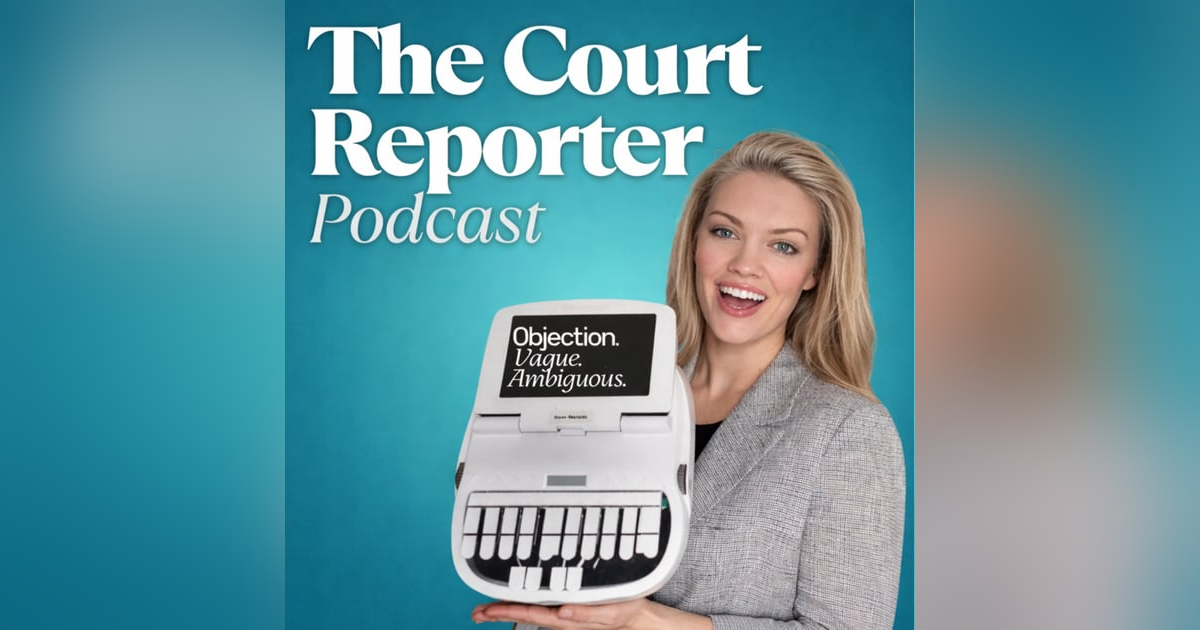


The court reporting profession is confronted by rapid advancements in artificial intelligence and an alarming rise in reporter burnout. As the mechanisms for capturing and delivering the official record evolve, court reporters find themselves grappling with the immense responsibilities of their roles, often at full capacity. This episode delves into the tensions that have emerged within the industry, as well as the solutions.
We advocate for a future where technology and the expertise of court reporters coexist harmoniously, building hybrid models that enhance efficiency without compromising the integrity of the profession. Our mission is to cultivate a collaborative environment that empowers reporters, optimizes administrative workflows, and ultimately upholds the pursuit of justice.
Takeaways:
- The court reporting profession stands at a critical juncture, facing challenges that require our full attention.
- Advancements in technology and AI, artificial intelligence, are transforming the methods of record capturing and delivery.
- Court reporters are confronting unprecedented levels of burnout while maintaining the official record's integrity... which will be explored more thoroughly in a future episode!
- A collaborative approach between stenographers and tech is essential for the profession's sustainable future.
- The "old" system is deemed unsustainable by many practitioners, necessitating urgent reform to address systemic issues.
- Leadership and vision are imperative to ensure that the profession evolves while preserving vital expertise.
And then, of course, my personal story for the last 5 minutes! :)
00:00 - Untitled
00:02 - The State of the Court Reporting Profession
01:15 - Navigating Technology and Stenography
02:39 - The Role of Court Reporters in the Justice System
04:32 - The Journey to Coaching: Understanding the Struggles
05:19 - Building Confidence in Court Reporting
📍 The court reporting profession is at a pivotal moment. Rapid advancements in artificial intelligence and legal technology are reshaping the landscape of how the record is captured, produced, and delivered. At the same time, court reporters are experiencing unprecedented levels of burnout. Many are working at full capacity while carrying the immense responsibility of protecting the official record across the profession. Reporters are openly expressing that the current system is unsustainable. This moment has created a deep tension within the industry. On one hand, stenographic reporters are concerned about the potential for technology to replace the craft they have spent years mastering.
On the other hand, courts, attorneys and litigants are demanding faster access to transcripts and scalable solutions that the current human-only models sometimes struggles to provide. If this divide continues to widen, the industry risks entering a self-defeating cycle, resistance to technological collaboration could accelerate the very displacement many reporters fear. The future of the profession should not be defined by conflict between stenographers and technology, but by the thoughtful integration.
My mission is to help build that bridge. I believe there is an opportunity to create hybrid models that preserve the expertise, judgment, and quality control of stenographic reporters, while strategically leveraging technology to expand capacity, reduce 📍 burnout, and improve access to justice.
This means bringing experienced reporters into the conversation as leaders and architects of the next generation of solutions. Our knowledge of the record, courtroom dynamics, and transcript integrity is indispensable. When that expertise is combined with responsible technology, we can create systems that empower reporters, improve workflow efficiency, and ensure that the legal system continues to receive the high-quality record it depends on. The goal is not to replace. The goal is advantage. Advantage for reporters who gain mental bandwidth and sustainable workloads. Advantage for attorneys and courts who receive faster, more reliable access to the record, and most importantly, advantage to the litigants who are seeking justice.
This moment calls for leadership, collaboration, and vision. By working together to design solutions, we can protect the integrity of stenography shaping a stronger, more resilient future for 📍 the profession.
So when I was in court reporting school, I was 100% focused on writing on the Steno machine. That was all I cared about. That was all I wanted to do. Even in regular classes. I was the only one that had my steno machine out, like hiding under my desk and I would be writing everything down. I was obsessed with the skill and the trade, and I think I missed everything else. Or maybe we just didn't learn it. I don't know. But either way, I left school unprepared for what I was about to encounter in the real world. So I was always looking for a podcast that I could listen to while I was doing my laundry or while I was cooking or driving to help me to learn the things that I need to learn.
To hear conversations about court reporters and what they experience in depositions, in trials and hearings on the record and off the record. Writing on the machine is not the only thing that matters as a court reporter. It's such an important role in the justice system and the amount of conversations that are available or accessible about this profession, the real live world of this profession, like conversations with court reporters, and the people who work directly with court reporters for the sake of the justice system are essential. Because it's not all about the method of how we take down the testimony, but it's about how we present ourselves, how we communicate assertively and professionally with elegance and grace. It's about how we set boundaries and stick to them, how we respect ourselves and those around us, and the justice system, how we speak up for the record, how we manage emotions when things get difficult and stressful, because court reporting, yes, it is one of the most lucrative but also stressful careers. This podcast was launched in an effort to fill that gap. I searched and searched every week. I would type in Apple Podcast, search bar, court reporters, court reporters. And I couldn't find anything helpful for what I was specifically looking for.
So I decided to launch The Court Reporter Podcast after becoming a certified coach. And the reason I became a certified coach is not because I wanted to coach people, it's really because I wanted to coach myself. Using my court reporting earnings, I invested in coaching programs, trying to figure out like, why am I struggling so much with running my business? Why am I struggling so much with managing my mind? Why am I so stressed? What's wrong with me? So I was trying to gain the confidence that I wanted.
while mindset is an extremely important and relevant part of life and confidence in general, I realized that court reporting is so specific that no matter how much we, try to quote unquote fix or uplevel our mindset and try to think positively, there's still issues with the system. So my goal is to help the court reporters who are in the same boat that I was in, who feel so confused, lost, stressed out, and alone, and who genuinely want to 📍 become the best court reporters they can be. Genuinely want to be confidently able to communicate with the attorneys and the judges, and control the room with grace and dignity, and uphold the integrity of our positions as guardians of the record.
Thanks for listening to the Court Reporter podcast. Let's go.


