#83 - What NOT to do During Remote Proceedings: Mistakes I've Learned Over Zoom
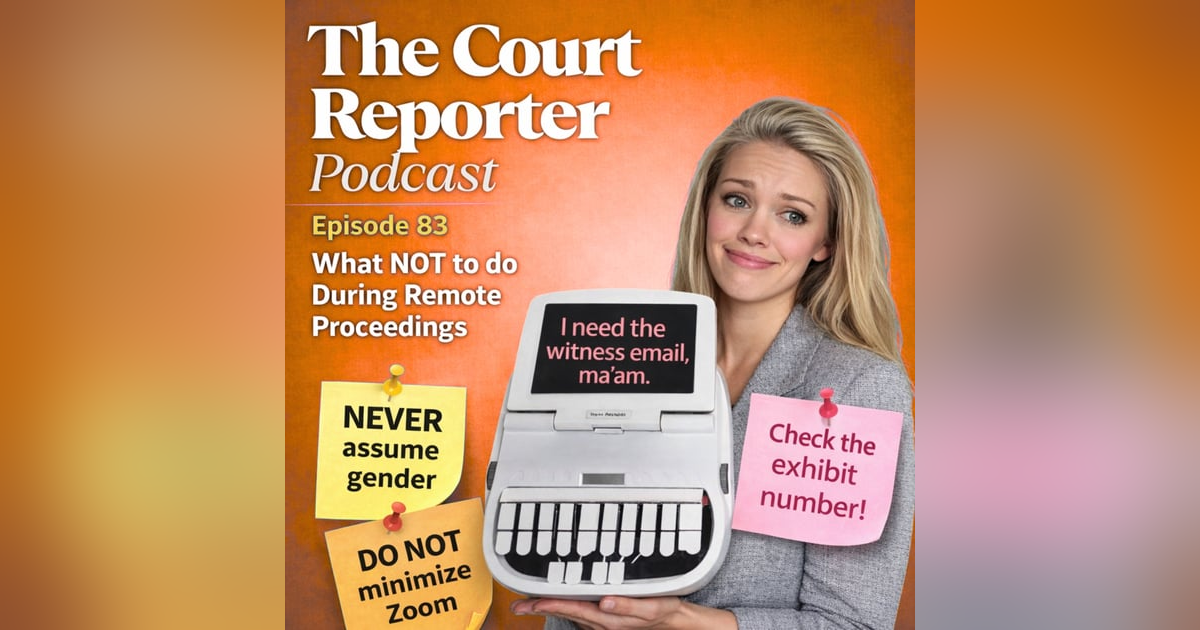


Episode Description
You know what no one tells you about remote depositions?
It’s not the big mistakes that trip you up…
It’s the small, seemingly harmless ones.
The moments where you think you’re being helpful.
The times you speak up when you shouldn’t… or stay quiet when you shouldn’t.
In this episode, I’m sharing real stories from the field—times I learned the hard way what not to do as a court reporter.
From awkward read-and-sign situations…
To accidentally overstepping with attorneys…
To one simple assumption that humbled me instantly…
These are the lessons that don’t always get taught—but absolutely matter when you’re on the job.
If you’re a new reporter—or even experienced—this episode will help you avoid the kinds of mistakes that can quietly impact your professionalism, confidence, and relationships with counsel.
In This Episode, You’ll Learn:
- Why you should never bring up read and sign unless it’s mentioned
- The “helpful” question that can actually create more work for everyone
- How one small assumption can instantly shift the tone of a proceeding
- What to do when exhibit numbering goes wrong (and why timing matters)
- The Zoom habit that can make you miss critical moments on the record
- How to stay in your role while still being proactive and professional
Key Takeaway
In court reporting, it’s often the smallest decisions that have the biggest impact.
Learning how to navigate those moments with clarity, neutrality, and confidence is what separates someone who is simply “getting through the job”… from someone who is truly in control of the room.
Share This Episode
If this episode helped you, share it with another court reporter—especially someone who’s just getting started. These are the lessons we usually learn the hard way… but they don’t have to be.
Connect With Me
🎙️ The Court Reporter Podcast
📩 brynn@courtreporterpodcast.com
Court reporters hold one of the most important roles in the justice system.
Speaker AWe're entrusted with the official records of the courts, and we also have to run our own businesses, which is not something most of us were prepared for.
Speaker AI'm Bryn Seymour, court reporter and life coach, and I invite you to join the discussion about the problems we face and the solutions we create on the unique journey of a stenographer.
Speaker AWelcome to the Court Reporter Podcast.
Speaker BHello, my friends, my beautiful, beloved court reporting friends.
Speaker BToday we're going to talk about some mistakes that I have personally made over the course of my career as a court reporter, especially as we started venturing into more and more remote depositions.
Speaker BSomeone emailed me and asked me, sent me, like, a long list of questions about remote proceedings because of a video that I released on TikTok and Instagram.
Speaker BIt was like a short video with some tips on how court reporters show up super prepared for a remote proceeding, meaning getting all your gadgets and wires and technology in place so that there are no glitches and no awkward.
Speaker BHold on, let me troubleshoot that.
Speaker BSo I received this question and just was feeling inspired to record an episode about it because it got me really thinking and reflecting on all the mistakes that I've made and how, you know, making mistakes is one of the best ways to learn.
Speaker BSo I think sharing them is a good way to help other reporters ensure that they don't make the same mistakes that I made.
Speaker BSo there's something that nobody talks about when you first start doing remote depositions.
Speaker BIt's not the big things that mess you up.
Speaker BIt's like the tiny little innocent moments where you're like, oh, my gosh, I was just trying to be helpful.
Speaker BLike those moments that seem harmless in the moment, like, you really wanted to go above and beyond.
Speaker BYou really wanted to be helpful.
Speaker BYou try.
Speaker BYou were trying your best.
Speaker BAnd because of that, I'm going to do something a little bit different.
Speaker BInstead of just giving the list of tips or a list of answers to that email, I'm going to tell you in the stories of exactly what happened, the real things that actually happened to me.
Speaker BMoments where I thought I was doing the right thing and learned the hard way that I absolutely was not.
Speaker BNumber one, the read and sign situations.
Speaker BI'm on a zoom deposition.
Speaker BEverything's going well.
Speaker BI'm feeling good, feeling on top of it.
Speaker BAnd toward the end of the deposition, I hear the magic words we'd like to reserve read and sign, which is great because sometimes they just actually, most of the time, they don't even bring it up.
Speaker BAnd in New York, again, we're going back to the systemic New York problems.
Speaker BBut in New York, it's kind of like no one really, like, we don't necessarily bring it up if the attorneys don't bring it up.
Speaker BAnd it's not really something that is emphasized, I guess.
Speaker BExcept recently I did work with a, with a client that actually, no, it was an agency.
Speaker BAnd that agency asked me if they waived the read and sign because I didn't note anything about the read and sign.
Speaker BI didn't include an errata sheet or a read and sign document paper at the end of the transcript.
Speaker BSo she asked, did they waive the read and sign?
Speaker BSo I just said, no, they didn't mention it at all.
Speaker BSo usually if they don't mention it, we just don't include that.
Speaker BBut for that specific agency, I guess it has to be mentioned.
Speaker BSo if they don't mention it, I would have to speak up.
Speaker BBut what happened?
Speaker BThis story that I'm talking about where at the end they said, we'd like to reserve a read in sign at that moment.
Speaker BThis was back in the day, you know, when remote proceedings were just starting to become more and more prevalent.
Speaker BSo they asked about read and sign.
Speaker BAnd I'm like, okay, amazing.
Speaker BI know exactly what to do.
Speaker BSo confidently, confidently, I say, okay, Council, if your witness would like to read and sign, I'll just need their email address so I can send that right over.
Speaker BSilence.
Speaker BNot a normal silence, that type of silence where you just can feel that something is wrong.
Speaker BYep, that silence.
Speaker BAnd the attorney goes, why would you need my witness's personal email?
Speaker BAnd immediately my brain sirens start going off in my brain, oh, no, no, no, no, no, we're in trouble now.
Speaker BAnd he continues, you can send it to me, I'll forward it.
Speaker BI'm like, yes, of course, absolutely.
Speaker BThat makes perfect sense.
Speaker BI don't know why I said that.
Speaker BI don't know why I even feeling like I don't even know why I exist right now.
Speaker BSo the lesson I learned is if they don't bring up read and sign, you don't bring it up.
Speaker BSo that's why I kind of got into that habit.
Speaker BAnd then that recent agency that asked me if they had waived the read and sign caught me off guard.
Speaker BBut if they do bring it up, you do not assume how they want it handled.
Speaker BYou have to ask, would you like me to send it to you directly or.
Speaker BSorry, would you like me to send it to you or directly to the witness?
Speaker BThat's it.
Speaker BBecause what I thought was being proactive was actually stepping outside of my role.
Speaker BAnd attorneys notice those things immediately.
Speaker BHere's the next story.
Speaker AThe email that created a problem.
Speaker BThis one is even worse because I thought I was being efficient.
Speaker BSo early on I had this idea.
Speaker BI was like, you know what?
Speaker ALet me just collect the witnesses email
Speaker Bat the beginning of the depot so I don't forget later.
Speaker BBecause I always forget those things, the little details.
Speaker BSo I'm just going to be super proactive and just gather all the info in the beginning.
Speaker AGenius, right?
Speaker BWrong.
Speaker BSo I say, could we also get the email of the witness so I can for the read and sign?
Speaker BAnd the attorney goes, I wasn't planning on offering read and sign.
Speaker BI'm like, oh, so now because I brought it up, now he feels like he has to offer it.
Speaker BAnd I just created more work for everyone, including myself, for no reason.
Speaker BSo the lesson learned.
Speaker BDo not introduce things that haven't been requested, even if you think you're being helpful.
Speaker BBecause in this job, helpful can quickly turn into you just complicated the entire proceeding.
Speaker BAll right, this one's pretty humbling.
Speaker BSo I joined a deposition.
Speaker BI see the witness's name, Ryan, and without thinking, without pausing, without using any of my brain at all, I go, good morning, sir.
Speaker BHow are you?
Speaker BAnd then the witness turns on her camera and goes, I'm good.
Speaker BIn a.
Speaker BIn a nice feminine voice.
Speaker BAnd I'm like, oh, that's not a sir.
Speaker BAnd then I just wanted to disappear from existence.
Speaker BLesson learned.
Speaker BNever assume gender.
Speaker BNever ever.
Speaker BNot from the name, not from the voice, not from the zoom box, nothing.
Speaker BJust say, good morning, counsel.
Speaker BGood morning, witness.
Speaker BGood morning.
Speaker BJust good morning.
Speaker BYou don't have to say witness.
Speaker BThat's kind of weird.
Speaker BNeutral, clean, and safe.
Speaker BBecause once you say it, you can't unsay it.
Speaker BAnd some people really get so offended.
Speaker BAll right, the fourth story is the exhibit disaster waiting to happen.
Speaker BActually, this one didn't go wrong, but it almost did, and I caught it at the last second.
Speaker BSo the attorney was marking exhibits, moving quickly.
Speaker BExhibit one, exhibit two, exhibit three, everything's flowing.
Speaker BAnd then the next one was he.
Speaker BLet's mark exhibit five.
Speaker BSo I'm looking at my notes, and I'm like, wait, what about four?
Speaker BDid he mean to do that?
Speaker BAnd now I have a decision to make.
Speaker BDo I stay quiet and fix it later, or do I speak up?
Speaker BAnd I'm telling you, every instant, every instinct in your body will say, don't interrupt.
Speaker BDon't say anything.
Speaker BBut I unmuted and said, council.
Speaker BThe last Exhibit marked was 3, so this would be 4.
Speaker BI decided to take my chances on that one.
Speaker BAnd he goes, oh, thank you.
Speaker BShort, simple, done.
Speaker ASo the lesson I learned in that
Speaker Bone was speak up early, fix it in real time, because if you don't, you end up with two exhibit fours or just like a missing exhibit, a chain reaction of corrections.
Speaker BI think actually what happened was they had already marked Exhibit 4 and they were asking, and then they were going to mark exit before we.
Speaker BYeah, that's what happened.
Speaker BIt wasn't that they skipped one.
Speaker BI mean, this has happened multiple times.
Speaker BAnd I always just, if I catch it, I, I stop them.
Speaker BAnd honestly, I've never gotten in trouble for that one.
Speaker BThey always appreciate it.
Speaker BSo if you don't, you end up with two exhibit fours, a chain reaction of corrections, and then like a whole mess to fix later.
Speaker BConfused attorneys and just like a transcript nightmare.
Speaker BSo trust me, they will not be happy if you try, if you want them to try to fix it later, or if you try to fix it later, it's going to be a huge mess.
Speaker BSo.
Speaker BSo in those situations, you want to speak up early.
Speaker AAll right, story number five, the zoom
Speaker Bmistake that nobody talks about.
Speaker BThis one is subtle, but it matters more than people realize.
Speaker BSo one time I had zoom, not, like, minimized, but I had my case cat on top of it.
Speaker BSo it was completely, almost completely covered because I'm like, I don't really need to look at them if I can hear them clearly, which was totally not like this was.
Speaker BI've never done this again.
Speaker BSo that was wrong because there was a time that someone lost.
Speaker BThere was a time someone lost audio.
Speaker BSomeone was waving.
Speaker BThey were typing in the chat.
Speaker BLike all this stuff was going on on the screen, but it wasn't actually audible.
Speaker BSo I'm just kind of oblivious to everything.
Speaker BAnd then it just like, then suddenly someone's saying, like, reporter, reporter.
Speaker BLike, hello, are you there?
Speaker BDo you.
Speaker BDo you see what's going on?
Speaker BSo what I always do.
Speaker BAnd even, like, you have to keep it open because you have to be able to see who's talking.
Speaker BSo many times I've been like, misident, like, almost misidentified speakers and objections because I wasn't looking at the screen to see who spoke in that moment.
Speaker BBut, you know, so that's really important because sometimes voices don't sound distinct.
Speaker BSometimes they sound very similar to each other, and it's difficult to pick up on exactly who's speaking, especially when there are multiple.
Speaker BMultiple Attorneys.
Speaker BSo what I always do is just
Speaker Amake it really small in the corner, like, on the side.
Speaker BI'll put it as, like, a vertical bar where I can still see everyone, but they're just a little bit smaller.
Speaker BAnd then casecat, I have on the rest of the screen so that I can monitor my writing in real time.
Speaker BSo the lesson learned, always keep zoom visible.
Speaker BAlways.
Speaker BWe are not just capturing words, but we're also managing the room, even if it's virtual.
Speaker BAll right, So, I mean, there are so many more things that I could probably think of.
Speaker BI'm sure tomorrow I'll be thinking of
Speaker Amore things and I'll be like, oh,
Speaker Bmy gosh, why didn't I include that?
Speaker BBut for now, if you take anything away from this episode, let it be this.
Speaker BIt's not the big, dramatic mistakes that get you.
Speaker BIt's the little ones, the ones that feel like I'm just helping.
Speaker BI'm just.
Speaker BI'll just say this quickly.
Speaker BIt's probably fine.
Speaker BThose are the ones that come back later.
Speaker BBut the good news is you don't have to learn the hard way, because I already did it for you.
Speaker BIf you ever have a moment like this where you were like, I just wish I could redo that entire interaction, I'd love to hear it.
Speaker BBecause, honestly, those are the stories that make you and everyone else around you better, and they're the ones that nobody talks about enough.
Speaker BAnd again, I want to say that I don't.
Speaker BThis episode is not intended to make you be on the edge and extra, extra, extra careful.
Speaker BIt's just, I just want to share my experiences so that you can have that knowledge in your toolkit going forward.
Speaker BIt's not so that you can be walking on eggshells all the time.
Speaker BI'm all about making mistakes.
Speaker BI think making mistakes are part of what shapes you into the amazing professional that you become.
Speaker BLike, that's the best way to learn.
Speaker BWhen you make a mistake and you experience the feeling that comes with that, you.
Speaker BSomething happens in your brain, in your neural pathways that helps you to really understand what's important, what's not important, what you should do and what you should never do again.
Speaker AAll right, quick update on the latest news in the court reporting industry.
Speaker AThe NCRA issued a press release posted by Global Newswire on March 19 just a couple days ago regarding the NCRA backed AI oversight bill receiving sponsorship, US Representative Hageman and US Senator Wicker and Welch introduce bipartisan and bicameral legislation to ensure the oversight of AI and ASR in the justice system research and oversight of AI and Courts act of 2026 would establish oversight mechanisms for these technologies used in judicial proceedings.
Speaker AMarch 19, 2026 2:00 Eastern Time National Court Reporters association the NCRA Reston, Virginia March 19, 2026 Global Newswire National Court Reporters association, the country's leading organization representing stenographic court reporters, captioners and legal videographers, announced on March 19 that U.S. rep. Harriet Hageman from Wyoming and U.S. senators Roger Wicker from Mississippi and Peter Welch from Vermont have introduced the Research and Oversight of AI in Courts act of 2026, bipartisan and bicameral legislation backed by the association that would establish comprehensive oversight mechanisms for artificial intelligence, AI and automatic speak speech recognition technologies used in judicial proceedings.
Speaker AThe bill comes as courts nationwide are increasingly considering using AI powered and automatic speech recognition, transcription and recording systems, raising concerns about accuracy, security and the preservation of due process rights.
Speaker ANCRA has been actively campaigning to inform the public about the impact of using these transcription technologies in the courtroom with the theme the Real AI Accuracy and Integrity.
Speaker ANCRA President Cindy Isaacson, rpr, an official court reporter from Shawnee, Kansas, says, the integrity of our judicial system depends on accurate, secure and reliable court records.
Speaker AAs new technologies are integrated, we we must ensure proper oversight and accountability measures are in place.
Speaker ANcra, the leading organization representing court reporters, captioners and legal videographers, has raised concerns about the reliability of AI powered and automatic speech recognition court reporting systems.
Speaker AThe association argues that human court reporters remain essential for ensuring accuracy and maintaining the confidentiality of sensitive legal proceedings.
Speaker ANCRA's executive director, Dave Wenhold, says court reporters undergo extensive training and certification to provide the precise, secure transcription services our justice system requires.
Speaker AWhile technology continues to evolve, human expertise remains irreplaceable in capturing complete, complex legal proceedings.
Speaker AThe bipartisan and bicameral bill would also establish a task force comprised of judicial officers and court reporting professionals charged with investigating the consequences of AI and ASR technologies implemented in court systems.
Speaker AThat sounds like a cool job.
Speaker ARecently, more than 70 members of NCRA who attended the association's leadership and legislative boot camp held in Alexandria, Virginia, met with their lawmakers and staff members to advocate for them to support the value of the stenographic profession by sponsoring and supporting the bill.
Speaker AThe bipartisan Collaboration on the Research and Oversight of potential AI in Courts act underscores the importance of ensuring accuracy and accountability in the judicial system across party lines.
Speaker AThe legislation now awaits committee assignment in the House of Representatives.
Speaker ARep. Hageman, a practicing attorney for 34 years before entering Congress, has been active in judicial reform legislation.
Speaker AShe earned her law degree from the University of Wyoming and served as a litigator for 34 years.
Speaker AShe currently serves on the Senate Judiciary Committee.
Speaker AEarlier this month, she introduced the Fair Artificial Intelligence Realization.
Speaker AAcronym is FAIR act to ensure federal AI systems operate truthfully and without bias.
Speaker ASenator Roger Wicker, who serves on the Senate Commerce Committee, has been a vocal advocate for protecting judicial integrity and ensuring technological innovations serve justice rather than compromise it.
Speaker AHis committee service includes Chair of the Senate Armed Services Committee and senior Member of the Senate Committee on Commerce, Science and Transportation.
Speaker ASenator Peter Welch earned his Law degree in 1973 from University of California, Berkeley, before settling in White River Junction, Vermont, where he worked as a public defender before founding a small law practice.
Speaker AHe serves on the Senate Committee on the Judiciary and Ranking Member and as ranking member of its Subcommittee on the Constitution Court reporters and captioners rely on the latest technology to use stenographic machines to capture the spoken word and translate it into written text in real time.
Speaker AThese professionals work both in and out of the courtroom, recording legal cases and depositions, providing live captioning of events and assisting members of the deaf and hard of hearing communities with gaining access to information, entertainment, educational opportunities and more.
Speaker AIf you're looking for a career that is on the cutting edge of technology, offers the opportunity for work at home or abroad, like to write, enjoy helping others and are fast with your fingers, then the fields of court reporting and captioning are careers you can explore at NCRA discover steno.org the NCRA a Z Intro to Steno Machine Shorthand program is a free online six week introductory course.
Speaker AIt lets participants see if a career in court reporting or captioning would be a good choice for them.
Speaker AThe program is an introduction to stenographic theory and provides participants with the opportunity to learn the basics of writing on a steno machine.
Speaker AThere is no charge to take the course, but participants are required to have access to a steno machine or an iPad they can use to download.
Speaker AOh or an iPad they can use to download the stenopad app.
Speaker AWhat is that?
Speaker AOh wow.
Speaker AOh my gosh.
Speaker AI need to.
Speaker AI need to look into that.
Speaker AI didn't know that there was a steno Pad app.
Speaker AThat's awesome.
Speaker AOkay, so to arrange an interview with a working court reporter, captioner, legal videographer, or a current student court reporting student, or to learn more about the lucrative and flexible court reporting or captioning professions and the many job opportunities currently available, contact prcra.org the U.S. bureau of Labor Statistics reports that court reporting field I'm sorry that the court reporting field is expected to be one of the fastest areas of projected employment growth across all occupations.
Speaker ACareer information about the court reporting profession, one of the leading career options that does not require a traditional four year degree can be found at ncraasdiscoversteno.org SAM.


