102 | AI, Co-Parenting & the Future of the Courtroom with Sol Kennedy
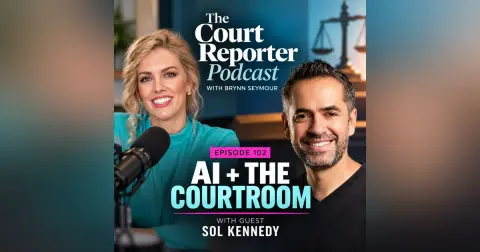


What happens when AI is used not just to document conflict, but to help prevent it from reaching the courtroom?
In this episode of The Court Reporter Podcast, Brynn Seymour speaks with Sol Kennedy, founder of BestInterest, an AI-powered co-parenting app designed to help reduce conflict and keep communication focused on what matters most — the children.
Sol shares how his own experience with divorce and high-conflict co-parenting led him to create BestInterest, and how the app uses AI to separate child-focused information from emotionally charged communication, allowing parents to deal with the practical details first and process the rest later.
The conversation then takes an unexpected turn into territory that will be particularly familiar to court reporters: how rapidly advancing technology is changing the legal profession.
Sol and Brynn discuss AI, transcription, speech-to-text, digital reporting and the question of whether technology will eventually replace parts of the traditional court reporting role. They also explore why human oversight and responsibility for the accuracy of the legal record remain so important.
Sol also talks about his experience as a serial entrepreneur, his time at Google, and why he believes AI has created an unprecedented opportunity for people with an idea to build their own technology solutions.
In this episode:
- How Sol's own divorce and co-parenting experience led to BestInterest
- How AI can help reduce conflict before it reaches court
- How BestInterest separates child-focused information from emotionally charged messages
- Why the original messages remain available for later review
- The difference between documenting conflict and actually helping prevent it
- Sol's journey from a 12-year-old software entrepreneur to Google and beyond
- How AI is changing the way entrepreneurs build software
- The future of AI, transcription and speech-to-text
- The debate around stenography and digital reporting
- Why human oversight remains important to the accuracy of the legal record
- How technology could change the role of court reporters
- Getting new technology and resources in front of judges and courts
About Sol Kennedy
Sol Kennedy is the founder of BestInterest, an AI-powered co-parenting app created from his own experience navigating high-conflict co-parenting. A former Googler and serial entrepreneur, Sol combines his background in technology with a mission to help parents communicate more peacefully and keep their focus on their children.
Resources Mentioned
BestInterest — Learn more about the AI-powered co-parenting app.
BestInterest Judicial One-Pager — A resource Sol says parents can submit to courts to explain BestInterest and how it can be used.
BestInterest Judicial One-Pager
BestInterest — Our Story — Sol's story of how his own co-parenting experience led to the creation of the app.
WIRED — “Divorced? With Kids? And an Impossible Ex? There’s AI for That” — The WIRED feature about Sol and BestInterest. WIRED
OurFamilyWizard — Mentioned in the episode as an established co-parenting communication platform.
TalkingParents — Another established co-parenting communication platform mentioned in the episode.
Connect with Sol
LinkedIn: Sol Kennedy on LinkedIn
BestInterest: bestinterest.app
00:00 - Untitled
00:03 - Industry Split: A Civil War in Stenography
00:53 - Welcome & Episode Overview: AI, Co-Parenting, and the Best Interest App
08:51 - From Floppy Disks to Founding Companies
13:45 - Court Reporting: Opportunity for Software Solutions
20:20 - Song: "The Record Never Lies"
On this episode of the Court Reporter Podcast.
BrynnIt's like a civil war in the industry right now because stenographers who write on the actual machines are advocating for stenography.And there are still new stenographers and people studying stenography.
Speaker CNot for moms, not for dads, not for lawyers, not for judges, not for us, not for me, for the children.For the children.
Speaker ASol Kennedy
Speaker COh yeah.Record never lies.It doesn't choose a side, no matter who is angry, no matter who denies.
Speaker AWhat AI can do is it can actually help mediate the conflict so it doesn't bubble up into requiring court intervention in the first place.
BrynnHey everyone, and welcome back to the Court Reporter Podcast.I'm Bryn Seymour, your host, and if you're new here, this podcast is about finding our flow as court reporters, building businesses that give us our time back, communicating with confidence and protecting the record without losing ourselves in the process.In this episode, I sit down with Sol Kennedy, the creator of Best Interest Seoul.Kennedy is the founder of Best Interest, the AI powered co parenting app hailed by Wired as the life saving solution for high conflict families.As a former Googler and a serial entrepreneur, Sol built the app by pairing hard won lessons from his own divorce with technology designed to shift parents from reactive to responsive communication.The result?More safety, more, more peace and a clear focus on what matters the most to the parents, which is the children.It's an innovative platform that leverages AI to strip away hostility and emotion from co parenting exchanges while preserving all essential details.It basically strips it down to only the essential facts.This is actually a big part of what we learn in coaching school.When you strip it down and remove the thoughts and the feelings and just get the facts straight, life can be so much easier.Sometimes we make things really hard for ourselves with our own thoughts.What we are choosing to believe and choosing to think about certain situations.And those thoughts can be planted by what people say or what we say to each other.What we say to people like our words can plant seeds.I love how this app really gets straight to the point.In this episode, we dive into how this tool functions, how tech might revolutionize dispute resolution before cases hit the legal system, and and soul's insights on crafting solutions for everyday challenges.Let's dive right in.Yeah.So you reached out about the app that you created.How's that going?
Speaker AIt's going great.Yeah.We're getting a lot of wonderful press, primarily we're just, we're getting a lot of great feedback from co parents that are had been struggling and are finding a lot of peace with our solution.
BrynnSo it sounds like your audience would primarily like you would want them to be people who are divorced, right?I mean, obviously my audience is not specifically about that, but yeah, when Louise.
Speaker ABrought the opportunity to me, I thought it could be a potential good fit.Talk with professionals through your podcast.Most of our clients these days come from referrals and we get a lot of referrals from therapists, but also from attorneys and other co parenting professionals.So since we're a newer app in the space and some of these apps that are often ordered in a lot of these cases, courts will order the ones they recognize.Our family wizard and talking parents and everyone's talking about AI.I mean judges obviously have even probably seen cases at this point where some level of AI has entered the courtroom.Oh yeah, AI and how it can be used in conflict mediation and how instead of just having an app that records and then is allowed or is able to provide evidence that instead what AI can do is it can actually help mediate the conflict so it doesn't bubble up into requiring court intervention in the first place.
BrynnIt's so crazy.It's like AI can replace even judges now.I mean it's just like not replaced.You know what I mean?It's just like, wow, it can do everything.
Speaker AIt.But the way I see everything when it comes to AI is that it up levels us.Right.So instead of a judge being forced to read through co parents arguing, bickering over something fairly nonsensical, the judge actually can preside over cases where you know, their weigh in has bigger impact.Yeah, it allows the courts to focus on the really important stuff.
BrynnYeah.So if you, you went through a divorce and you probably spent I don't know how many years like you know, going through the.
Speaker ASeveral years.
BrynnYeah, yeah, the co parenting was really, really hard because of the emotional messages.And so in order to get rid of those kind of like attacking emotional messages, you created an app that allows the parents to communicate, but it censors the messages.So it takes out the emotional extra stuff and they have the option to see it later.
Speaker AYeah, that's, that's basically the concept.So primarily one of our primary features is that we will actively remove any content that isn't child focused from the message that you see in the beginning.So when you're, when your co parent sends you a message that might bring up the past or include some Resentment or whatever, then that part's stripped.But the part that is the business of co parenting, like the time of drop off, what's needed, that stays so in the moment of the receipt of the message, you're not getting triggered, you're not going into your cycles, you're able to just do what is necessary to be a good co parent and then the rest of the message is saved and you can view it later.So when you've dropped off the kids or you've, you're in a quiet place, you can kind of do the processing.Right.To see that original message and make sure you're not missing anything and make sure you are doing the emotional work needed to heal yourself.
BrynnDo you recommend doing that?
Speaker AAbsolutely.I'm, I'm.It took me 38 years before I went into therapy room and, and I'm so glad that I did.And it's a big part of my life seeing therapists and I think that everyone really should be looking at this process of divorce as a process of healing.We came into oftentimes a relationship that maybe wasn't the best for us and so we have an opportunity to grow and heal so that we don't repeat the same mistakes going forward and so that we can also work on the relationship that we do have with our co parent to ensure we're able to communicate more cleanly.
BrynnYeah.Is it like in a regular text message or is it inside of an app like like signal or something or.
Speaker CWhat's that?
Speaker AIt's inside of an app?Yeah.It works just very much like our family wizard or talking parents.The communication flows through the app.
BrynnOh, I've never heard of those.So is, are there other things out there that are similar or you just like completely is something completely new?
Speaker AWell, so there are apps that have been around for a very long time.One of them is our family wizard.They were the first co parenting app and their idea was that they would collect all the information that was being sent back and forth between co parents schedules and that sort of thing.And then if you ever needed to, you could print out a report, bring it to the judge and, and it would be, you know, a verified court report that would be presentable easily to the judge and that's their primary deterrent.So they rely on court as the deterrent.So they say that the co parents will become more peaceful because they know that all their communications are being recorded.And I think in practice really smart it is.But in practice I think that what happens is you, especially in these high conflict Cases, they don't really.That's not a good enough deterrent.So what we're doing is we're stepping in and saying, well, some of the communication here can be cleaned up to prevent this couple from going off the rails and needing to go to court in the first place.So that's really the innovation of best interest.
BrynnThat's awesome.And so in the process of building, I mean, have you ever built something like that before?Are you a founder or is this the first time you've founded something, you've started something like this?
Speaker AWell, so I've been an entrepreneur since I was 12, so.
BrynnWhat do you mean since you were 12, Tom?
Speaker ASo when I was 12 I launched an app, but this was back on a, when it was on a floppy, a piece of software that would show an inspirational message when you booted up your computer.And I sold it around my town and it was kind of my first dabble in software in pre Internet days.And yeah, and since then I've just, I've always been inspired to work for myself and to solve problems.
BrynnAnd did that, where did that go?Like, did it, was it like your first, you know, you're just sharing you have that entrepreneurial spirit or did it actually like take off or anything?
Speaker AThat particular company did not take off.I sold about half of my inventory of diskettes, but in, you know, that was the start of, of my career as an, I'm sure I've, I've started, I think at this point, eight different companies and I sold three of them and I ended up at Google.And so at Google I, I realized that I'd come to a place in my career that I really didn't need to.I'd made some good investments and had done well and so I didn't really need to work.And so I decided to take the time off when my daughter was born to become a full time dad.And I'm, I never have regretted that for any, any, any moment.It was really wonderful.
BrynnDo you have any, any tip?Well, just really quick, I mean, I don't want to go off on a tangent, but you mentioned you, you made some smart investments.Like, any tips on how we, I,.
Speaker AI invested in some early companies that you'll know now, Instacart was one of them, Coinbase.And these were founders that I met through being an entrepreneur, being in Silicon Valley.And so I had the opportunity to join them in early rounds.I was at a place in my life where things were going well.I'd gone through divorce, started going on My own emotional healing journey and that became all consuming.But as my kids have grown, they're, they're still young, 7 and 9, it became easier for me to start thinking about what's next.And so when I had gone through this divorce and ongoing co parenting struggles, I had this insight that this was really painful for me and others.And the more co parents that I talked to, I heard the same story of just almost being beholden to your co parents moods and how much that can be so detrimental for being present with your kids and this next chapter, rebuilding it.And so it was that insight that helped me get to a place where I realized, oh, okay, so I can take my interest and abilities in technology and apply it towards this very meaningful place.And I didn't start Best Interest with the intention of it, you know, being the next Google.Right.I started it because this is something that I know people really need and I really want to help out in that way.
BrynnThe reason I ask about that is because kind of have the same thing with the court reporting industry.It's like we have these pain points and these specific, like everything is disorganized and scattered and like the workflows are all, all over the place and I'm trying to build like this VTM app.So that's why I was curious to ask like, you know, your experience with how you first started getting into that thing because yeah, I feel like I've been, you know, for a couple years I've been trying to, to figure this out, map it out and I'm not giving up.Even though it's, even though it's hard.
Speaker ABut here's the thing, Bryn.Yeah?Like when it comes to technology, no, there's been no better time to produce software.It's getting so easy.I mean, even when I started Best Interest two years ago, I was doing the coding because I knew how to code.And I would say starting off today, you don't really even need to know how to code.
BrynnYeah, there's vibe coding.
Speaker AOh, it's, it's getting, it's so different now.It's changing literally day by day.And so yeah, I would advocate just keeping on going with it.I also think that the future of startup innovation is the solo entrepreneur.You know, a person like you or me that has a project, has a vision, has a purpose and they just want to build it.And it's amazing all of the things that you can do now with AI without having the personal experience doing it.Like I, I use AI for a lot of my marketing and Content production, and that kind of stuff that I would have ordinarily had to hire a team for.So I think that's.It's a really special and exciting time to have a good idea, um, because I think you can just run with it.And especially with your influence in your space with court reporters, it could be a really good launching pad for that software solution.
BrynnOnce you have it, it's like, it's a lot of failure, a lot of trial and error, a lot of, like, investing.So I, you know, I want to see.I'm going to.But thank you for that advice to.That we're in the right time to be creating things and turning our ideas into reality.
Speaker AI'm an entrepreneur, so I will always be giving entrepreneurial advice rather than using someone else's product to make your own.
BrynnYeah, it's funny, the.The Court Reporter podcast was originally called the entrepreneurial Court Reporter Podcast, but it's.It's a lot of it is about, like, entrepreneurship, because I think without building a team, court reporters are just so burned out and just drained and working so much well.
Speaker AAnd if you can empower those small firms to be able to manage their own workload and survive in this time of consolidation, then they're going to be very excited to pay you to keep alive.Because no one really wants to work for a conglomerate.They're not going to pay very well, I don't imagine.
BrynnI feel like court reporting is.So.I'm sorry to turn this conversation into.
Speaker ACourt reporting, but, like, I'm curious.I know nothing about court reporting.
BrynnLike, I feel like it's such a.A very profound position and a very, like, dignified position.And I just don't think that it should be huge corporate companies running the show.I think it should be like the government or something like federal.
Speaker AWell, I mean, I would.I would be very curious about this, because sitting in a courtroom not knowing anything about a court reporter, I don't really fully understand, you know, the job and all that, but also being a technologist, I'm thinking, gosh, technology is advancing so rapidly in the areas of transcription, language, understanding.Isn't that something that the court reporter industry is afraid of?Or is that not likely to ever come to pass?
BrynnIt's like a civil war in the industry right now because stenographers who write on the actual machines are advocating for stenography, and there are still new stenographers and people studying stenography.But, you know, we can't deny that it is decreasing and that it is a lot of Effort.It's a lot of work to learn how to do that.When now text to speech, I mean speech to text is getting better and getting more accurate.But at the same time with something as important as a legal transcript, who, who's going to be responsible?Who's going to be liable?Like someone has to be in charge of making sure that the record is accurate and being there present to witness everything and to kind of control the room.They're scared of being replace.They say that digital reporters are ruining the career and the profession and degrading.
Speaker AWell, is the digital reporter a person sitting in the room using technology or is it.
BrynnYeah.
Speaker AOh, okay.
BrynnWhich to me, I mean, I think that's valid because if a person is there overseeing whatever's happening and making sure it's accurate, I mean, of course the thing is like if someone's actually writing every word down, then of course they're paying more attention and they're more involved in it.But if they're not, it's easy to kind of get to drift off maybe and think like, oh, I'll just do this, I'll figure it out later.But I think the consensus has been that the human is, is essential and it's going to be for a long time, at least for another 10 years.I don't know.
Speaker AWe're, we're all having very similar conversations across every industry, right?
BrynnYeah, like the accounting, you know, even I.So I heard somewhere that like in Asia there's like AI or some machines doing, doing surgeries and stuff, which is crazy.I don't know if I believe that, but I bet.But I was always thinking like that's the one thing that AI could never replace.I thought like it could never replace doctors who do surgeries and hair stylists.Someone has to be physically doing that.But actually probably possible.
Speaker AYeah, probably.
BrynnSo what's your plan with like distributing your app to the courts?
Speaker AWell, we have been ordered in at this point.A variety of jurisdictions have ordered us.I don't think that we are at a place where I'd say we have a lot of awareness in the judicial system.Most of our usage comes from referrals from lawyers, therapists and other co parenting professionals.So we're not really getting ordered by the courts that often.Usually it comes from an actual parent advocating for the use of this app in the court.So they're doing the informing job.So as you know, this is an area law is a slow moving for good reason.And so it takes a while for them to be educated.So I'm going out, I'm talking and I'm attending conferences and sharing about the solution, how it's different than what they might be used to.
BrynnBut there's not like an official process to submit it to the courts.
Speaker ANot that I'm aware of, though.You're closer to the industry.
BrynnYeah, I could definitely ask the judge that works in family court that I'm closed with.
Speaker AThat would be amazing.Yeah, I, I haven't heard of any such process, but yeah, that'd be really interesting to learn from them about how they would see that approach working.
BrynnWhat would you submit in a simple format to just kind of let someone know this is what it is?
Speaker AYeah.We have the judicial One pager that we invite our parents to submit to court.
BrynnIs it just being implemented anywhere?It's not like specific to jurisdiction?
Speaker AIt is not, no.It's.It's available all throughout the US And Canada.
BrynnThat was such an interesting conversation with Saul, especially hearing how tools like Best Interest could help reduce conflict before it ever even reaches a courtroom.Saul also pointed out that there isn't really a clear path for getting something like this in front of judges.So that's a conversation I'll be continuing with a family court judge I've been in touch with.I'll find out what judges would actually want to see and how technology like Best Interest could fit into the court process.We'll definitely share what we learn in future episodes.And if anyone wants to weigh in on what tools are being used or wants to learn more about Best Interest and maybe recommend it to your judge, check out the show notes for links to the app and a one page court resource.Thanks for listening and I'll see you next time on the Court Reporter podcast.
Speaker CTwo stories told from opposite sides Two versions of the same goodbye One says left, one says right One says day and one says night.Memories change with the passing years Filtered through frustration, hurt and tears but somewhere on the underneath the noise a simple truth still has a voice.Feelings fade People change Words get lost in time But a record kept without an agenda Leaves the truth behind.
BrynnThe.
Speaker CRecord never lies it doesn't choose a side no matter who is angry no matter who denies the timestamps tell a story when memory can't decide the record never lies.The record never lies.A Message sent at 8:03 a promise made and guarantees the pickup Miss the schedule change the facts remain exactly the same not for blame and not for shame not to play somebody's game but because a child deserves a chance to live beyond the back and forth?Because someday when the questions come?And everybody sure they're the facts?Recorded carefully?Can bring the truth to life?Record never lies?It doesn't choose a side?No matter who is angry?No matter who denies?The screenshots and the timeline?The moment's frozen in time?The record never lies?Ris?Not for moms?Not for dads?Not for lawyers?Not for judges?Not for us?Not for me?For the children?For the children?For the children?The record never lies?Long after voices fade?Long after memories blur and accusations change?The truth doesn't get louder?It simply survives?The record never lies?Eyes?The record never lies?


