101 | How a Mother-Daughter Team Built a Successful Court Reporting Business
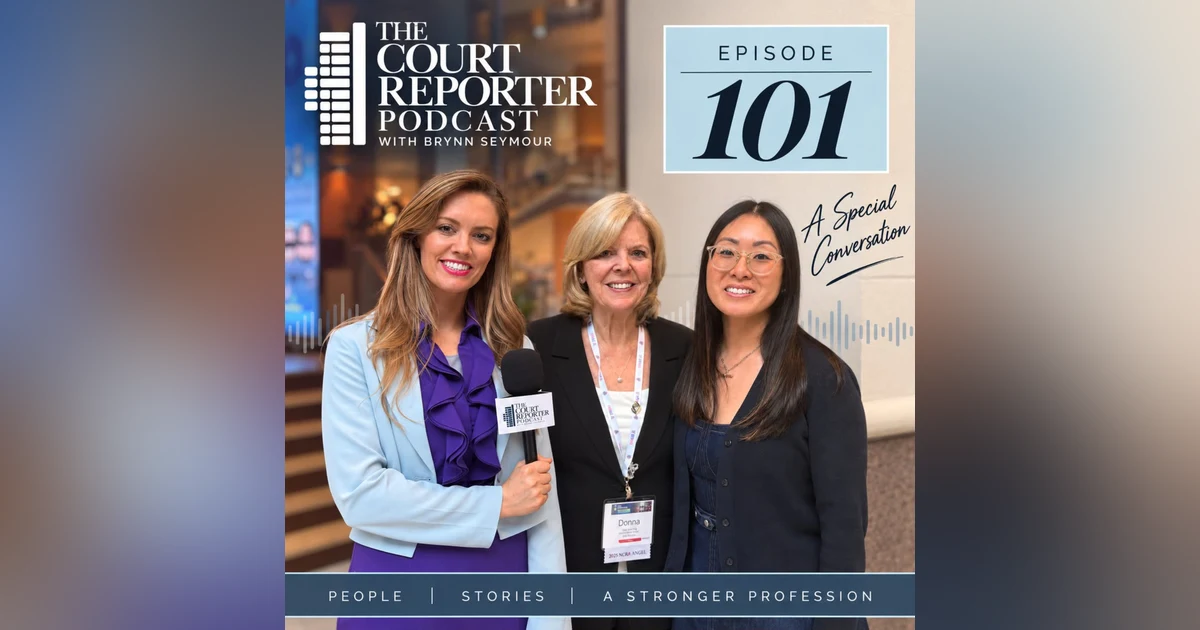


What happens when you stop trying to do everything yourself and start building a business around what you do best?
In this episode, I sit down with Donna, a stenographic court reporter who has been certified since 1969 and has more than 50 years of experience in the profession, and her daughter Dana, who went from delivering transcripts to overseeing operations and eventually becoming an equity partner in the family business.
Donna takes us back to the early days of her career, from taking on demanding assignments to navigating decades of technological change in court reporting. Along the way, she built an agency and a reputation around what she does exceptionally well: being a court reporter.
But as the business grew, so did everything that came with running it.
That's where Dana's strengths came in. With a natural ability for organization, operations, and building relationships, Dana gradually took on more of the administrative side of the business—allowing Donna to spend more of her time doing what she does best.
Their story is a great example of something I talk about often on this podcast: you don't have to be great at everything to build a successful court reporting business. You need to know your strengths, recognize where you need help, and find the right people to fill those gaps.
We also talk about the importance of relationships, earning clients' trust, securing municipal contracts, adapting to changes in the industry, and what it takes to successfully build and sustain a business across generations.
At its heart, this is a story about a mother and daughter whose very different strengths became their greatest advantage.
In this episode:
- Donna's journey through more than 50 years of court reporting
- What court reporting looked like when Donna began in 1969
- Building a court reporting agency from the ground up
- Navigating decades of technological change
- How Dana went from delivering transcripts to running operations
- Transitioning administrative responsibilities from Donna to Dana
- Why Donna and Dana's different strengths work so well together
- Knowing what you're good at—and when to ask for help
- Building and maintaining strong client relationships
- Earning trust and securing municipal contracts
- Strategic delegation in a court reporting business
- Building a successful mother-daughter partnership
- Creating a business that can adapt and endure
On this episode of the Court Reporter.
Speaker BPodcast, we have an amazing guest on today and her daughter.
Speaker BAnd it's just amazing to see a mother and a daughter working together, running an agency, running a court reporting business that we can all learn so much.
Speaker CFrom when the gavel finally falls.
Speaker CBut justice lives in the details, and the details matter most of all.
Speaker AWell, if I'm going to brag, I might as well do it now.
Speaker BPlease do.
Speaker AI did.
Speaker AAfter many years of coming in third, third, third at national, and then I think two times, maybe I was second.
Speaker AAnd then, much to my surprise, in 2021, when I least expected it, I finally was first.
Speaker CFacts that I recorded keep on singing past the room justice lives in every word I say A thousand tiny moments make the story that we pay I.
Speaker DLike dealing with people.
Speaker DI like listening to people.
Speaker DI think maybe that's why I connect with so many different people.
Speaker CHi, everyone.
Speaker BWelcome back to the Court Reporter Podcast.
Speaker BI'm Bryn, your host.
Speaker BIf you're new here, this podcast is all about the business side of court reporting.
Speaker BEntrepreneurship, delegation, leadership, and.
Speaker BAnd just viewing life through the lens of a court reporter.
Speaker BTalking about communication, justice, professionalism, and protecting the record and our mental bandwidth.
Speaker BToday I'm joined by Donna Earlob and her daughter Dana.
Speaker BDonna has been a court reporter for more than 50 years, and together they've built a really interesting mother daughter court reporting business.
Speaker BWe're talking about how Donna built the business and how Dana eventually became the person running the operations.
Speaker BBasically her VTM behind the scenes and why knowing what you do best and getting help with the rest can make such a big difference in your productivity.
Speaker BSo let's get right into it.
Speaker BWelcome to the Court Reporter Podcast.
Speaker BSo I'm here today with Donna Earlob and her daughter Dana Erlob.
Speaker BThey both run an agency together.
Speaker BDonna is one of the most respected stenographic court reporters in the profession.
Speaker BShe has been a certified Shorthand reporter since 1969.
Speaker BThat means you have more than 50 years of court reporting experience.
Speaker BWe've got a lot of.
Speaker BA lot of insight to draw upon then.
Speaker BAnd you have won the Illinois Speed Championship numerous times and earned multiple medals in the National Court Reporters Association's Speed and Real Time contests and competed internationally at Intersteno and then.
Speaker BAlso, she holds a prestigious certification including the RDR Registered Diplomat Reporter, CRR Certified Real Time Reporter, and FAPR Fellow of the Academy of Professional Reporters.
Speaker BShe's a frequent educator and speaker for the court reporting profession, including the National Court Reporters association webinars and seminars such as Word A fun and informative look at word usage and idioms.
Speaker BIs that all correct?
Speaker BYes, it is wonderful.
Speaker BWe have an amazing guest on Today and her daughter.
Speaker BAnd it's just amazing to see a mother and a daughter working together, running an agency, running a court reporting business that we can all learn so much from.
Speaker BFirst, I mean, I usually like to ask guests to introduce themselves.
Speaker BI know I just read your bio, but if you would like to add anything, please do so.
Speaker AWell, if I'm going to brag, I might as well do it now.
Speaker BPlease do.
Speaker AI did.
Speaker AAfter many years of coming in third.
Speaker BThird.
Speaker AThird at national, and then I think two times maybe I was second.
Speaker AAnd then much to my surprise, in 2021, when I least expected it, I finally was first.
Speaker CWow.
Speaker AYeah.
Speaker AAnd then it was either a year or two years later.
Speaker AI did not come in first that year, but I had a perfect 280Q&A.
Speaker AI was not just first in that segment, but perfect.
Speaker AIt just shocked me.
Speaker BHow do you get first place if you didn't get it at 280 perfect?
Speaker BOh my goodness.
Speaker AWhy I didn't get first place is because it's three five minute segments where the first is literary and then legal opinion and then Q and A.
Speaker ASo if all my numbers didn't, it didn't put me in contention for third.
Speaker AI was fourth.
Speaker BWell, that's amazing.
Speaker BThat's very impressive because I mean, there should be a first place for that.
Speaker BLike just the fact that you got 280 perfect, I think that's probably like a world record.
Speaker AIt's not a world record, but it's seldom, you know, accomplished.
Speaker AI believe it was Jeff Weigel who was, who had a perfect like seven years prior.
Speaker AIt happens, you know, seldomly.
Speaker BThank you so much for sharing that.
Speaker BDana Erlab.
Speaker BShe joined Earlab Bowen full time in 2005 overseas day to day operations, became an equity partner in 2021 and now serves as director of operations and principal.
Speaker BThat's pretty amazing.
Speaker BAnd that's exactly why I wanted you here as well, because you're running the business.
Speaker BYou, you were able to create a business where you remove yourself from the admin, which is the core of what I talk about on the Court Reporter podcast.
Speaker BBecause I believe it's very important for court reporters to be able to focus on writing on their own skill.
Speaker BWhat makes them shine, what makes us shine?
Speaker BWe write and we don't do the rest.
Speaker BSo let's talk.
Speaker BLet's start from the beginning.
Speaker BHow did you become a stenographer like Is there a story that you could share about that?
Speaker AI was a 17 year old high school graduate, concerned in 1968, concerned about what I was going to do with the rest of my life.
Speaker ANo money, because in those days there was no funding.
Speaker AIt was during the Vietnam War time when if you had money, you could do something else.
Speaker AOtherwise you went into the service and there was no way to borrow money to go to college.
Speaker ASo I was working in a certified grocery store and I was like sort of content there, but again, rudderless.
Speaker AAnd so then my mother brought a card home from the bus.
Speaker AIt was just for a business school.
Speaker ASo I sent it in and the salesperson called me back and asked me to come downtown.
Speaker AMy little sister had to hold my hand practically and take me over to the L. And so anyway, he was a good looking guy and he was kind of flirty and he showed me some steno that was readable and he said, these people do very well.
Speaker AI said okay, and I signed a contract.
Speaker AMaybe I wasn't even 18, I'm not sure about that, but I signed a contract for 14 months.
Speaker AI had no idea what a stenographer did.
Speaker AAnd then I had to go back to work and save my down payment, which was like about $360 or something.
Speaker AAnd that was it for me.
Speaker ASo much to my surprise, I fell into the profession that I was born to do totally by accident.
Speaker AAnd my ignorance of the fact that most people spent a lot of time in school and went month to month at the competing school across town, it served me well because I didn't know that it was unusual to finish school in less than a year.
Speaker AI was living on $100 a month and my monthly school payment was 80.
Speaker AVery dire times.
Speaker AI practiced my briefs.
Speaker AI'd sit on the porch with my grandfather reading the words and I'd tell him the brief.
Speaker AOr maybe I'd write it on my machine, I don't remember.
Speaker ABut I just put everything into it and like I said, it just had to happen.
Speaker AThere was no other option in my mind.
Speaker AI got a job at the court reporting agency that I ended up working at.
Speaker ABut my job at the time was typing for court reporters.
Speaker AAnd we were using these Dicta belts.
Speaker AAnd so of course I was a very good typist.
Speaker AAnd then I was waiting until I could take the CSR, which was in September of 69.
Speaker AAnd so then I took it and I passed it on the first try.
Speaker AAnd then I started working and I was working on a manual machine and I was at that agency for 15 years.
Speaker AWithin about six months of me becoming a reporter, they sent me on what was supposed to be a two week assignment at the University of Illinois in Champaign.
Speaker AThe assignment was they were holding sort of a trial for students who had, they said, rioted these days I don't think we'd quite call it that, but they supposedly broke $40,000 worth of windows.
Speaker AAnd.
Speaker AWell, anyway, I went down there for two weeks and I ended up being there from the middle of March until September because while I was there, Kent State happened, which is where students were actually killed and maimed by the National Guard on the college campus.
Speaker ABut my whole thing at that time was I just wanted to buy nice clothes and be a court reporter and be a professional, you know.
Speaker AAnd I got to Champaign and I couldn't believe, you know, it was.
Speaker AI didn't even own a pair of blue jeans.
Speaker ABut I couldn't get over like looking at these kids and you know, no bra.
Speaker AAnd it was, the whole thing was like mind boggling to me.
Speaker AThen I went down to this job and they put me up in the student union.
Speaker AAnd the first three days I was there, I got one hour of sleep.
Speaker AEach day I got one hour of sleep, I was a walking zombie because it was a big job that I was ill prepared for and I was, you know, working all day and all night with one other reporter.
Speaker AIt just, we were completely not prepared.
Speaker ABut the good news is that it ended up being like a trial by fire for me.
Speaker AThat made me grow for sure.
Speaker AYou know, it's something that I, I learned a lot from.
Speaker AWe ended up hiring local people to type for us and I learned how to dictate and I learned, you know, I mean, it was really something that was my trial by fire.
Speaker AAnd then I came back to Chicago after being very comfortable down there and went to work in, in the city.
Speaker AAnd I was there for 15 years before I decided to leave.
Speaker ABecause I just, I'm fond of saying that I needed to have a lobotomy or leave.
Speaker AI had no other choice.
Speaker AThat caused my husband a lot of fear and uncertainty and I can't believe, to this day, I can't believe I did it because this girl here was on her way to our house from South Korea and I was going out on my own and I didn't have any connections because like if you worked for an agency, you didn't.
Speaker AWe didn't share with other agencies.
Speaker AAnd so I didn't know what I was getting into.
Speaker AAll I knew was that I had to leave And I sent out business cards and announcements.
Speaker AAnd I had no aspirations to have my own business.
Speaker AI just wanted to have a few clients and make some money.
Speaker AAnd she took me.
Speaker AI took her, I should say, to my.
Speaker AOur first meeting with an accountant.
Speaker AYou don't remember, of course, she was in a baby carrier.
Speaker AAnd so she is as old as the business.
Speaker AYeah.
Speaker BWow, that was a really amazing story.
Speaker BAnd could you elaborate a little bit more on, like, what was this school job?
Speaker DLike?
Speaker BYou said, it was a school.
Speaker BRight.
Speaker AI was so in over my head.
Speaker AI had law professors who were spouting, you know, about constitutional issues and First Amendment rights and everything.
Speaker AAnd I was so green.
Speaker AAs I said, it was a real trial by fire.
Speaker AAlbert Jenner, it was his alma mater, so he wanted this thing.
Speaker AHe was delighting in this whole process.
Speaker AAnd what was supposed to be two weeks went on so that I started in March and then went through April, and then it was sometime in May that Kent State happened.
Speaker AAnd that caused another outpouring of outrage on campus.
Speaker AAnd so there were more alleged crimes committed on campus.
Speaker AAnd so that led to the hearings extending all the way until September.
Speaker ABy then, I was feeling very good, but, man, it was something.
Speaker BIt takes hitting that moment where you're working so much and you just decide, like, I have to do something about this.
Speaker BLike, for me, at least, you come to a point where as a court reporter, there's just so much work that you have to do behind the scenes that comes after the actual taking down of the testimony.
Speaker BAnd we need to find a way to like, to get ourselves out of.
Speaker BOut of that.
Speaker BI know that might not be exactly how it evolved for you, but.
Speaker BBut it just reminded me of how I felt when I was doing.
Speaker BI think it was like board of parole hearings, and it was one after another, and I felt like I was working 24 7.
Speaker BSo do you want to share about.
Speaker BYou know, earlier at lunch, we were talking about the admin and how you prefer to just do what you do best.
Speaker BWrite on the machine, take down the testimony, meet the clients, network.
Speaker BYou know, what a business owner does and what a court reporter does.
Speaker BTalk a little bit about that process of how Dana came into the picture from Korea.
Speaker BSo talk a little bit about the business and how that evolved.
Speaker BAnd both of you, either of you can share about that.
Speaker AI had no choice but to do what I had to do.
Speaker AAnd we figured it out.
Speaker AAnd I think that's just.
Speaker AIt's my generation and it's our circumstances.
Speaker ALike, you know, here's this Opportunity and there's no going back.
Speaker AYou just have to do it.
Speaker AAnd that's what I did.
Speaker AAnd it wasn't just that job.
Speaker AI mean that job was the beginning of really me, like really testing me, what I could do.
Speaker AAnd then it went on from there.
Speaker AIt's almost like a blur.
Speaker ABut staying up all night typing a transcript was the norm for me.
Speaker AWe would go to court and the way we did it at my agency was the one reporter would do the afternoon and then the morning.
Speaker ABut it was not unusual for me to be up all night doing 150 pages of transcript typing.
Speaker DLike on a QWERTY word.
Speaker BYeah, but what's the point of writing it down during the testimony?
Speaker BIs it because there was no audio or.
Speaker AOh no, there was no audio in those days, the computer Aided Transcription, there was no audio for that.
Speaker AThat was ICE went on the computer, which I was scared to death.
Speaker AI didn't have them the mental, the ability to learn the computer.
Speaker ABut 1980 we went on with the old data point, you know, system where we had a great big pie shaped thing that I'd slide into the mainframe and run it up and then translate our transcript on like a little tiny window.
Speaker AAnd then we would flop out on great big floppies to be able to go to another dumb station and edit the transcript.
Speaker AAnd then one of the things that caused me to kind of like almost in a way get fired was that I wanted to be able to have a, the ability to work at home.
Speaker AAnd I went ahead and found a way to buy a flop out station is what we called it.
Speaker AIt was just an edit station.
Speaker AAnd all you did was put on the great big, I don't know how big the disc was.
Speaker AIt was a big one, like you know, this big.
Speaker AAnd then I would be on the 1240 train.
Speaker AThat was the last train home at night.
Speaker AAnd that's just how it was.
Speaker AAnd if we had, you know, daily copy, we would spell each other on.
Speaker ALet's say we were doing this big job where they were deposing a doctor who was assessing verbally every patient he saw at a dioxin spill in Missouri.
Speaker AAnd actually that was kind of what caused me to leave that job because they expected us after we had performed like thousands of pages where we would go and he would be deposed patient by patient and then another reporter would relieve me and I would go back and do it.
Speaker AWe were still not using Scopus or anything.
Speaker AWe were doing it all ourselves.
Speaker AAnd we were delivering the transcript by 9:00-clock-FEDEX, that job just kind of did me in.
Speaker AAnd when they wanted us to go to South Carolina and live together in a condo and buy our own food and everything and cover this trial, by that time, I was.
Speaker AI had kind of, like, was bossy.
Speaker AI had my own little following within the agency.
Speaker AAnd I said, you know, hell, no, we're not doing that, and I'm not doing it.
Speaker AI was going through infertility treatment, and I had a life, you know, and I didn't want to leave.
Speaker AAnd so I was, you know, the sacrificial lamb.
Speaker AI left, and I can't believe to this day that I did it.
Speaker AAnd my husband was rightly scared to death because we just didn't have a backup plan, and we had expended most of our savings on the adoption.
Speaker AAnd it was just really.
Speaker AIt was an interesting time, but it worked.
Speaker AAnd it was hard.
Speaker AIt was hard because I call lawyers sophisticated debtors.
Speaker AThey don't always pay on time, if at all.
Speaker ASo it was rough.
Speaker AHonestly.
Speaker AThe rest of it is a bit of a blur.
Speaker AOnly that I evolved with computers and with writers, and audio sync didn't come along.
Speaker AI wrote for 33 years without any audio backup whatsoever.
Speaker BBecause I think that makes you a better reporter.
Speaker AIt did, but I don't think the clients, you know, I mean, seriously, when I went got audio, I was kind of surprised.
Speaker AYou know, audio's much nicer.
Speaker AI mean, when you don't have audio, that's a.
Speaker AThat's a big job to be writing perfectly and be able to transcribe it the way it should be.
Speaker AIt makes a difference.
Speaker BSo, Dana, we just heard that you came to the United States and you were adopted and now have grown up and become an operations manager for your mom's business.
Speaker BSo operations is a really important skill in this profession.
Speaker BAnd court reporters, that is not really, like, our main.
Speaker BYeah, it's not really our main skill.
Speaker BLike, we need people who have, like, the opposite skill.
Speaker BSo tell us about how did you view this growing up?
Speaker BAnd, like, how did you get into it?
Speaker BAnd just share your perspective on how has that changed things and how did it evolve from your perspective?
Speaker DSo growing up.
Speaker DNo, I wanted nothing to do with her business.
Speaker DWe actually fought a lot.
Speaker DI only started working in 05 for her because I was in between jobs, and I was doing far too much partying and not going to school like I should have been doing after high school.
Speaker DSo she only hired me to deliver transcripts.
Speaker DThat's all I was pretty much allowed to do until I could prove myself, you know, just delivering transcripts.
Speaker DAnd then it evolved into me answering the phones and then taking jobs and writing them in the book.
Speaker DAnd then it started with.
Speaker DBecause she used to always do the assignments and we would have like a book that we would write it in.
Speaker DThere was a lot of redundancy in writing things out.
Speaker DI would watch her make the assignments and then I would be like, no, you shouldn't put that person there because of this, this and this.
Speaker DAnd one day she was like, well, why don't you do the.
Speaker BBecause you're thinking about delivering it.
Speaker BIs that why?
Speaker DLike, no, I was thinking about like, maybe the reporter came back and she had, you know, it was an all day job that they needed right away and then she was going to put them on another long job for the next day.
Speaker DAnd I was just like, I had that knowledge because I was in the office and she was out taking jobs.
Speaker BOh, so like you would hear from the other reporters, like, so from hearing those things you developed an understanding.
Speaker DYeah.
Speaker BOf how it should operate.
Speaker DI was also like writing out the list of outstanding.
Speaker DAnd so I knew what people were turning in or what they had outstanding.
Speaker DSo that was always being factored into assignments too.
Speaker DSo then I started assigning and then I was like producing transcripts and doing some invoicing.
Speaker DThen I went to reporting school for a little bit.
Speaker DIt did not work out.
Speaker DObviously we argued a lot about practice because I just refused to practice.
Speaker DIt was like, this was my strength.
Speaker DAnd then that was her strength.
Speaker DAnd so, yeah, then we kind of met in the middle and then I got pregnant with my daughter and it's just grown from there.
Speaker DAnd I, you know, started doing like small stuff and now I do the big stuff.
Speaker DI miss the small stuff sometimes.
Speaker BWhen you say the small stuff, is that like, can you give an example?
Speaker DOh, like delivering, delivering transcripts, copying exhibits, scanning exhibits, not dealing with attorneys that are yelling at us about something or, you know, and honestly, like, I don't mind.
Speaker DIt's very rare when it happens, you know, you can't please everybody and we always get one or two.
Speaker DBut just now I'm really hands on with the reporters and the paralegals and the clients.
Speaker DI feel like I'm like Oz, because nobody really sees me or meets me, but I talk and I email them often.
Speaker BLet's talk about building the business.
Speaker BSo you decided to start bringing you said business cards or like going door to door.
Speaker BLike, how did that start?
Speaker AMy reputation.
Speaker AI had built a reputation and I knew that I felt Pretty certain that I'd be able to leave, send out announcements, and they would come.
Speaker AIf you build it, they will come.
Speaker AAnd that's kind of what happened.
Speaker AAnd then we did experience a big downturn.
Speaker ANot too long after I left with the largest medical insurer of medical providers, Illinois.
Speaker AThere was a large agency in Chicago that gave them a ridiculous price on the original.
Speaker AAnd, well, it's probably more information than we need to talk about.
Speaker ABut the attorneys, the clients that I had, lost the ability to choose their court reporter.
Speaker AThe first impact on me with contracting, that went against me.
Speaker ABut we managed to, you know, rise from that.
Speaker AWe developed relationships with other reporters in Chicago and helped other people.
Speaker AAnd then we started getting WBE certification, and we acquired the city of Chicago.
Speaker AThat was a very large client of ours and still is.
Speaker AAnd, you know, I just had somebody call the other day wanting to order a transcript from the trial that I covered.
Speaker AAnd he said, and, oh, by the way, I have been using a big box, and I'd like to talk to you about calling you.
Speaker AAnd so if you provide a really good product, they notice.
Speaker AAnd that's been a lot of our experience.
Speaker AAnd I have to brag about Dana.
Speaker AShe develops relationships with not just the clients, but.
Speaker ABecause I see the clients on the job, and I feel like I've never wanted to be a salesperson ever.
Speaker BYeah, I feel like a lot of.
Speaker AUs don't, but I'm selling myself just by my presence and my comfort with them.
Speaker ABut this one, she has these relationships with the paralegals and the secretaries, for lack of a better word, admin people at the law firms.
Speaker AAnd it's really amazing.
Speaker AIt amazes me because she handles it so well in a way that I never could, I was never comfortable with.
Speaker AAnd she has developed also relationships with reporters.
Speaker AShe has the ability to ask in an interested way.
Speaker AShe's not putting it on, but she knows more about their lives and their vacations and their kids.
Speaker AAnd it really works like, I can't believe sometimes.
Speaker AAnd so I often say out loud, I don't know how it happened, you know, because I never thought nepotism was necessarily a good thing.
Speaker ABut something does happen in the home with whatever your profession is, that somehow they absorb it.
Speaker ABecause, like she said, she had no desire to join me in any way.
Speaker AAnd I only gave her the job because.
Speaker ABecause we were on the outs.
Speaker AI needed somebody for, like, two weeks because they were.
Speaker AThe person was on vacation.
Speaker AI like to think that in those two weeks, she saw me and she saw that people respected My opinion or sought out my opinion.
Speaker AAnd that could have been maybe a turning point for her.
Speaker AShe doesn't.
Speaker AShe's making a face.
Speaker AI don't know about that, but I think it was a positive thing.
Speaker AThing it otherwise, because I remember you saying to me, I like working for you.
Speaker AYou did say that.
Speaker AI remember it well.
Speaker AI do remember.
Speaker DWorked out very well.
Speaker DI don't think any of us, either one of us, were expecting it to work out.
Speaker AWell.
Speaker DNo, but I'm glad it did.
Speaker AYeah.
Speaker ABecause she handles a lot.
Speaker AI mean, I. I don't have to do anything but replace.
Speaker AI think she does too much.
Speaker AI mean, she's always got her laptop with her and without complaint.
Speaker AI've got to say that she does not complain about it, but she was up in the room working, and she's monitoring everything and holding everyone else's hand.
Speaker BWhat is it that you like about doing this work?
Speaker DI like dealing with people.
Speaker DI like listening to people.
Speaker DI think maybe that's why I connect with so many different people.
Speaker DLike, if I really ask them how they are, like, I want a real answer.
Speaker DJust like I would expect if somebody asked me how I was, I would give a real answer.
Speaker DAlso, I feel like this job is really hard, and at the end of the day, they probably just want somebody to listen to them, you know, and just be like, oh, my gosh, you're right.
Speaker DThat attorney was.
Speaker DIs awful.
Speaker DI'm so sorry.
Speaker DYou had this long, right?
Speaker DYeah.
Speaker DThey need to be told, like, you're right.
Speaker DI'm sorry.
Speaker DEven though it's like, me giving them this job, I'm sending them off, a.
Speaker BLot of people don't understand, like, a lot of scheduling people or operations that are not cooperative, they don't understand how difficult it is.
Speaker BSo if you develop that understanding or at least portray it to them, it makes all the difference, I think, because then they feel understood and they become more loyal and more willing to take one for the team when a lot of times others are not.
Speaker DI do agree with that.
Speaker DAnd once again, like, I feel like it sounds like I do it only to get people to work, but really it's not, you know, like, I truly do understand because I see how hard, you know, she works and some of the things.
Speaker DI don't always fill her in on everything because I feel like that's my job and she doesn't need to shoulder all, like, the silly little things that happen day to day.
Speaker DI'll tell her about the big things.
Speaker DThings that are, you know, become problematic or just so she knows, you know, if somebody's unhappy.
Speaker DAnd honestly, the same thing with secretaries and paralegals.
Speaker DI think why we've gotten new clients while I've been working here is because if I'm working with them and they're like a copy firm, I'm never pushy, but I'm always nice.
Speaker DAnd I always just tell them, like, hey, if you ever need anything or you need a reporter last minute, just let me know and I'll see if I can help.
Speaker DYou and I, we have gotten a lot of work that way that have become our clients.
Speaker DAnd I like working with people.
Speaker DI feel like I can connect with people.
Speaker BWell, I love that and I think it's such a great note to end on building relationships, listening to people and really understanding what they need.
Speaker BA huge thank you to Donna and Dana for joining me and sharing their stories.
Speaker BAnd thank you so much for listening to listening to the Court Reporter podcast.
Speaker BSee you in the next episode.
Speaker CThe jury gets the headlines the cameras love the scene But I'm the one who's catching all the moments in between It's a witness getting nervous A question asked just right an exhibit number circled like a tiny neon light Names spelled so pretty Dates and times in line all the little, little scribbles turn to golden over time justice lives in the details in every word I save a thousand tiny moments make the story that we pay the world court's final verdicts when the gavel finally falls but justice lives in the details and the details matter most of all.
Speaker CHey, one speaker.
Speaker CHey, slow down now Let the question hit the air that little pause before it says the truth is really there There's a witness and an attorney and I'm keeping perfect pace Like a secret song I'm writing for the future just in case Cause memories go blurry Like a chorus out of tune but facts that I've recorded keep on singing past the room justice lives in the details in every word I say A thousand tiny moments make the story that we pay the world Quotes final verdicts when the gavel finally falls but justice lives in the details and the details matter most of all.
Speaker CMost of all.
Speaker CEvery sidebar, every ruling, every question, every truth, every whisper, every answer every voice preserved.
Speaker CJustice lives in the details in every word I say Long after all the people believe still the record's on the PA the world loves all the endings but before the curtain falls Justice Lynn lives in the details and the details matter most of all.
Speaker CMost of all.


